


I would characterize the time spent imagining and then drafting The Time of the Novel as one in which I felt frequently torn between competing impulses: At first, the sort of book I thought to write was a short bildungsroman in the style of Unica Zürn's Dark Spring (1969), a novella translated by Caroline Rupprecht from the German. Classic mid-century literary fiction.

Dark Spring
Unica Zürn
Trans. Caroline Rupprecht
Exact Change, 2000 [1969]
I loved the spare length of this tragic story, which unfolds over a very neat eighty pages. When I read a work like Dark Spring, which details the chronicle of a young girl who experiences an immense desire, I feel my own desire stoked, even as I imagine the world is by and large indifferent to the desires of young girls.

Lament for Julia
Susan Taubes
New York Review of Books, 2023
In a similar spirit, I celebrated the timely publication of a previously unpublished novella by Susan Taubes, Lament for Julia (c. 1962). More mid-century literary fiction. On a sentence level, Lament for Julia inspired so much glee ("Was there ever a more fertile mine of ideas than I?"). It also satiated this wish I had for an unconventional narrator, a poltergeist who inhabits the body of a delicious young woman, Julia. Ever a fan of fictions that explore the problem of "the double," I remain inspired by Taubes’s singular treatment of these two intertwined entities.
As I moved closer to embarking on a first draft of The Time of the Novel, I kept circling unresolved theoretical questions I had about narrative and the nature of my pursuit: fiction.

Biting the Error: Writers Explore Narrative
Edited by Mary Burger, Robert Glück, Camille Roy, and Gail Scott
Coach House Books, 2004
I turned to the anthology Biting the Error: Writers Explore Narrative, edited by Mary Burger, Robert Glück, Camille Roy, and Gail Scott (2004) so as to call upon some narrative traditions that felt closer to the present moment. In one notable instance from “The Killers,” an essay by Kathy Acker, she writes:
I think of narration, or the narrative that tries to encounter the real, as that which is negotiating between two orders of time: clock time and chaos. I must say the more I think about it, the more I think writing is about time. The writer is playing—when structuring narrative or when narrative is structuring itself—with life and death. He or she is maneuvering between order and disorder, between meaning and meaningless, and so is making literature.

Writing Degree Zero
Roland Barthes
Trans. Annette Lavers and Colin Smith
Hill and Wang, 2012 [1953]
I thought I might explore these ideas because: 1) I wanted to make literature, and 2) Acker makes this activity sound very hardcore. But as I said, I was torn between some competing impulses.
On the one hand, I aspired to write a very classic bildungsroman; on the other, I wished to write something more unbridled, that broke free from tradition. I also wanted my book to flirt with the playful brand of metafiction I encountered in works by Enrique Vila-Matas, Paul Auster, and Mario Levrero. But writing in a classic realist mode or a late experimental style that imitates the impulses and artifice of another era is hard (as it is foolhardy), much in the same way that speaking in an English affectation like the actors in a Hitchcock film is hard, likely because one is attempting a dialect that is borrowed from a time that is not one’s own. I revisited Roland Barthes's Writing Degree Zero, where he writes in the opening essay "What Is Writing?" (1953):
Writing is precisely this compromise between freedom and remembrance, it is this freedom which remembers and is free only in the gesture of choice, but is no longer so within duration. True, I can today select such and such mode of writing, and in doing so assert my freedom, aspire to the freshness of novelty or to a tradition; but it is impossible to develop it within duration without gradually becoming a prisoner of someone else's words and even my own.

The Foucault Effect: Studies in Governmentality
Michel Foucault
Edited by Graham Burchell, Colin Gordon, and Peter Miller
University of Chicago Press, 1991
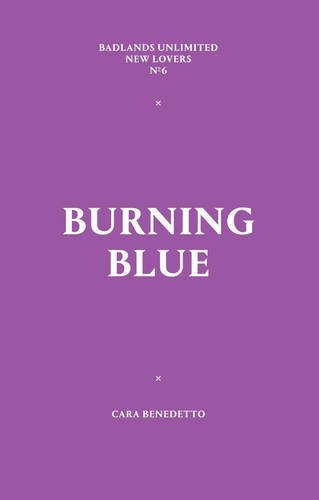
Burning Blue
Cara Benedetto
Badlands Unlimited, 2015
Maybe I could embrace this idea of becoming imprisoned within duration. I read the last page of Michel Foucault's "Politics and the Study of Discourse," where he writes: "discourse is not life; its time is not yours" (The Foucault Effect, 1971). In a bid for my freedom, I decided I would write something un poco más postmodern, in that whatever I was making could be both anachronistic and undeniably of its time. I also wanted to enjoy my era, and the experience of being alive now. I remembered those purple Badlands Unlimited art erotica editions were really fun. I also loved their breezy length, which hovered in the 12,000-18,000 word range, and I came to enjoy writing when I imagined it being read by a reader more intrepid of spirit than I am now.

TOAF (To After That)
Renee Gladman
Atelos Press, 2008
Reissued by Dorothy Project, 2024

Inland
Gerald Murnane
And Other Stories, 2024 [1988]
Still in search of more contemporary fictions, I revisited Renee Gladman's TOAF (To After That) (2008). I began thinking more intentionally about possible novel structures that begin where other narratives end, or those that end where other narratives begin. That ouroboros-like quality has always enticed me. In order to better appreciate it, rather than schematize or demystify it, I thought I might need to come under the influence of some stronger drugs (I refer to books as drugs because of the ways they can alter your perception). So I megadosed on the work of Gerald Murnane. To absorb even .01% of his narrative capacity for stasis would change me, in a good way. If readers notice passing references to Murnane in The Time of the Novel, these are likely intended as homage. His books, particularly the novel Inland (1988), had a profound effect on me as he seemed to have encountered some very mysterious and essential truths as they pertain to both living and writing.
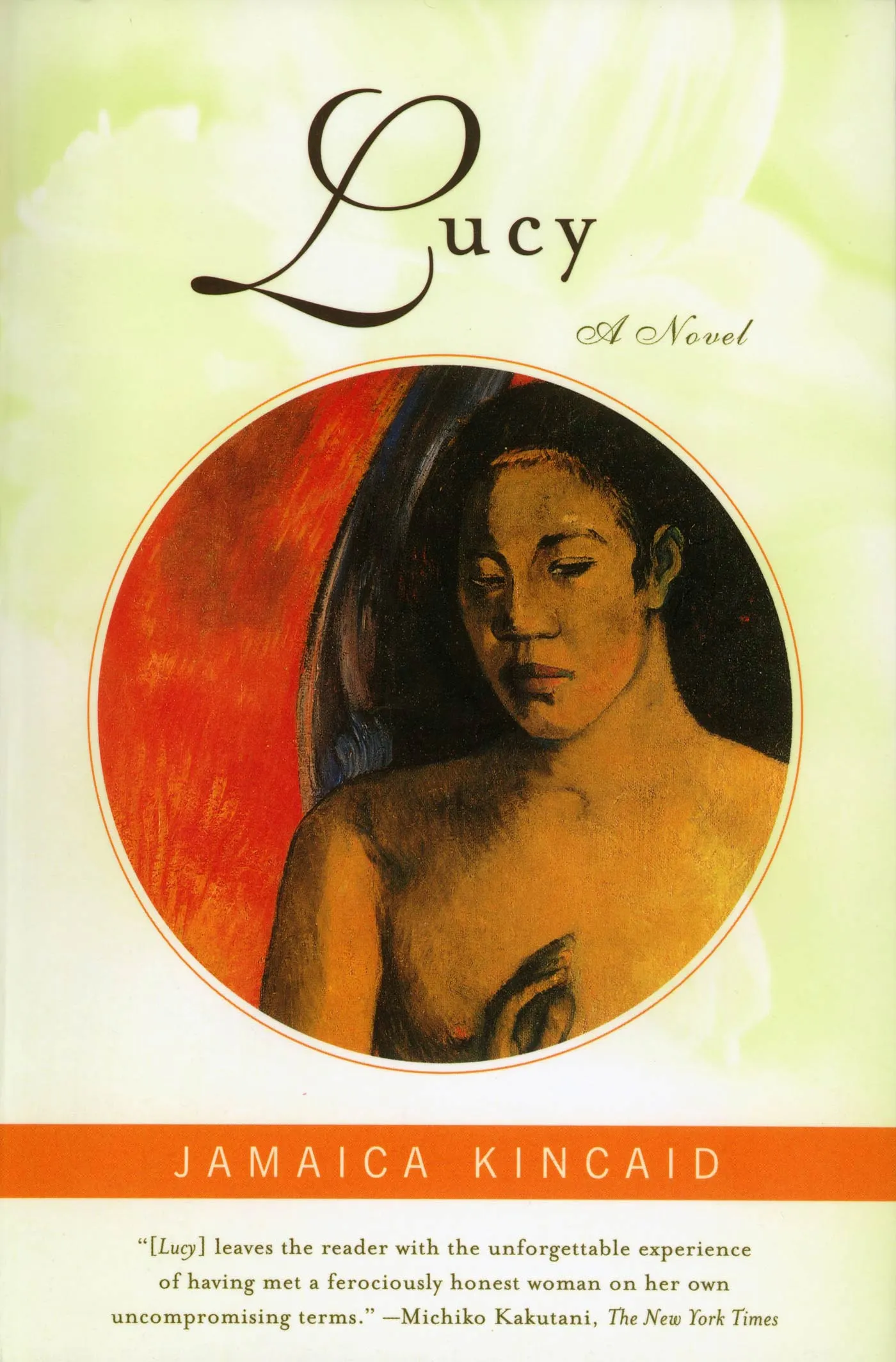
Lucy
Jamaica Kincaid
Farrar, Straus and Giroux, 1990
One of the last books I read as I embarked on the final draft of my novella was Lucy by Jamaica Kincaid (1990). I had yet to resolve what the relationship of the narrator was to the events being narrated. As I read Lucy, a kind of open secret about the art of storytelling had been revealed. It was then that I understood something about the written self’s relationship to time. Just as one series of events had come to a close, I was finally ready to finish the book by properly penning its beginning.